Question: In the deserts of Joshua Tree National Park, we studied how atmospheric nitrogen deposition reshapes microbial nitrogen (N) cycling during "hotspots", the short bursts of biological activity that follow rain events in arid soils. Our goal was to understand how added N shifts microbial life-history strategies and soil N cycling in these soils with high potential for N loss.
Team: I worked on this project with Dr. Steven Blazewicz at Lawrence Livermore National Laboratory, alongside Dr. Darrel Jenerette, Dr. Peter Homyak, Dr. John Sickman, and Dr. Emma Aronson. The work was supported by a DOE Office of Science Graduate Student Research Fellowship.
Findings: Using ¹⁵NH₄ stable isotope probing, we found that nitrogen deposition shifts desert microbial communities toward copiotrophy, favoring fast-growing, resource-exploitative taxa during nitrogen-cycling hotspots. This built on related findings that bacterial denitrification drives elevated N₂O emissions in these drylands, and that soil ammonia emissions shift predictably across gradients of aridity, pH, and nitrogen deposition.
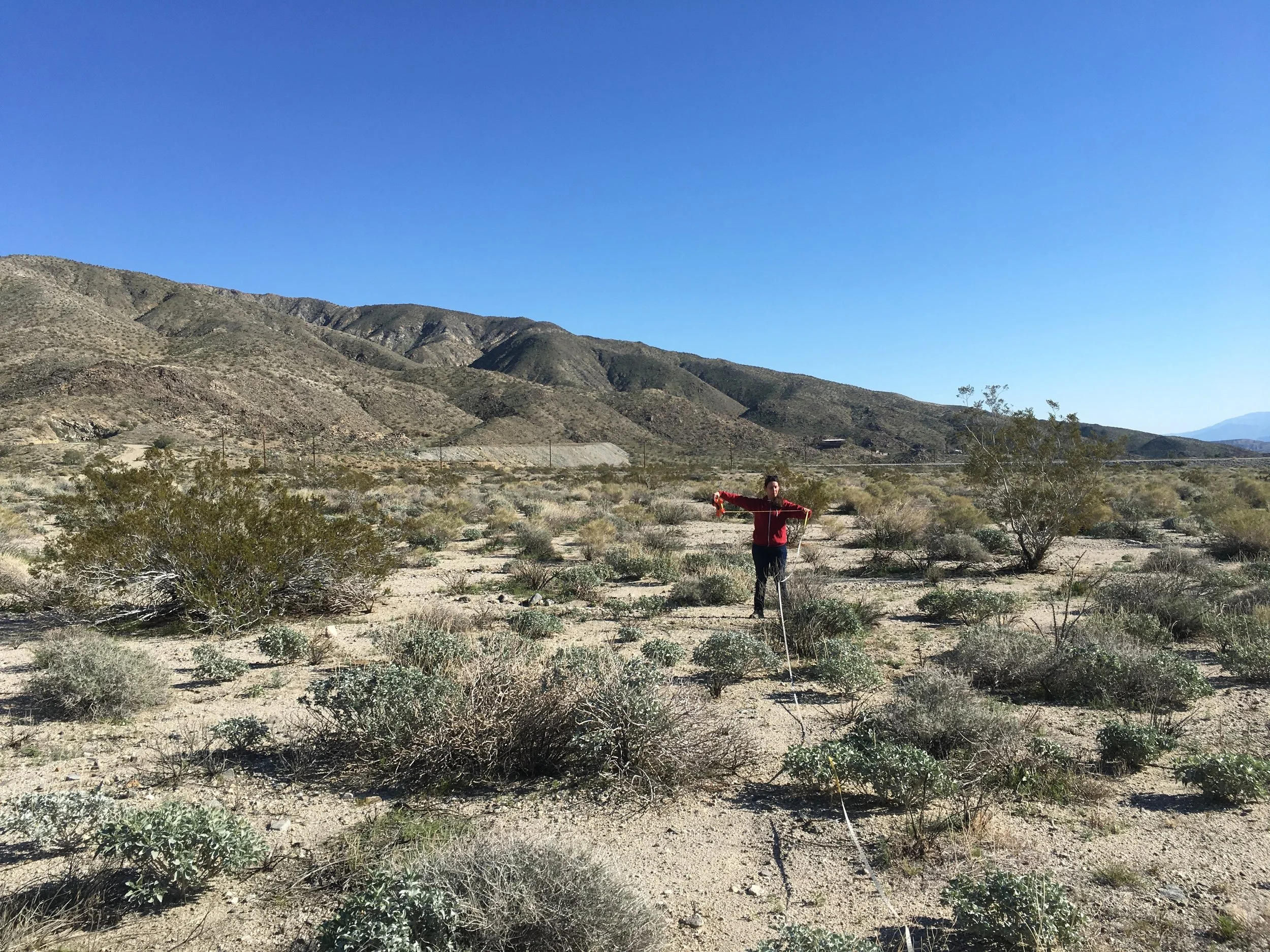
Emma setting up our plots under the creosote shrubs
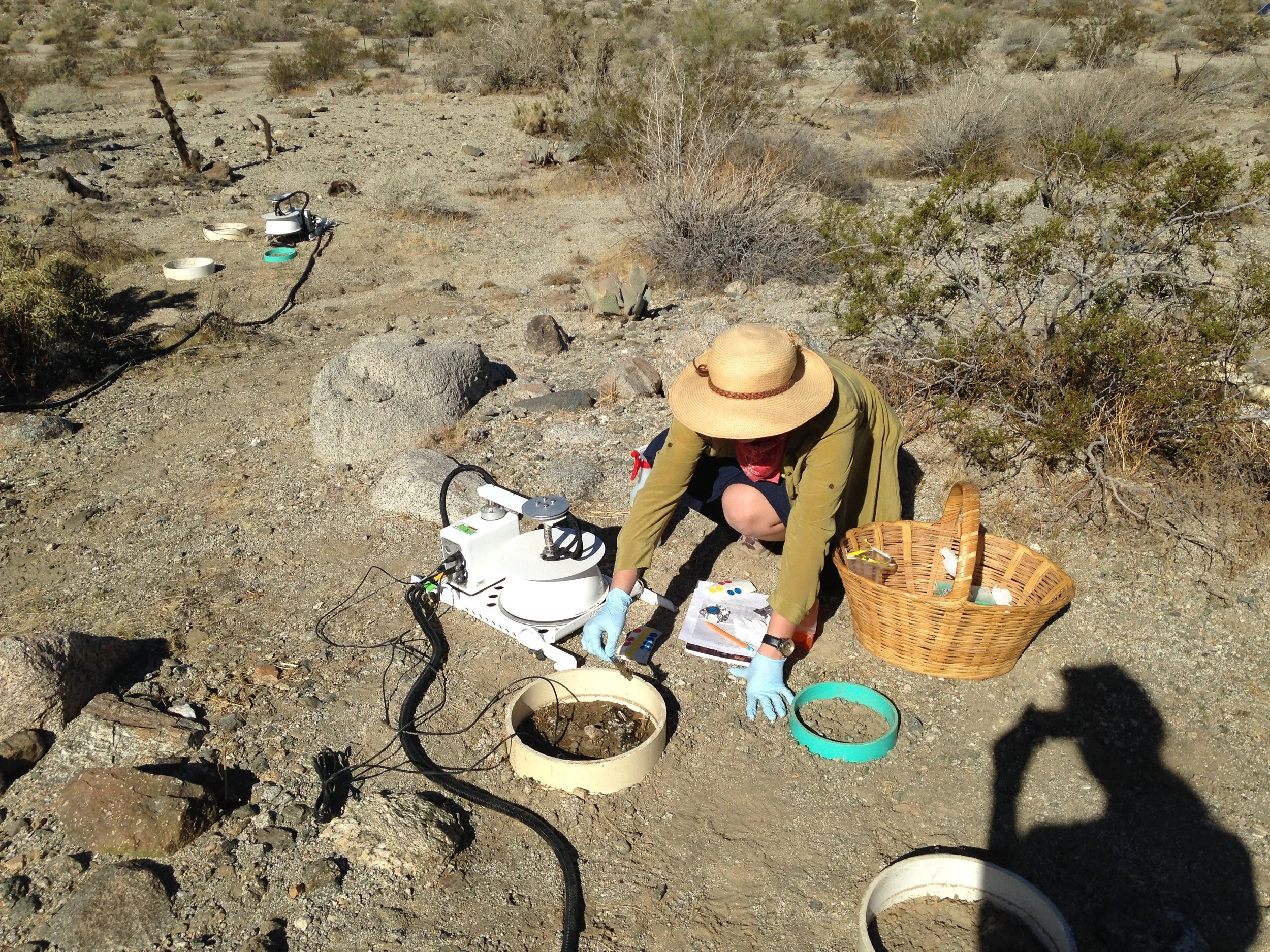
Collecting soil microbes and gas flux data simultaneously.
References:
Shulman, H. B., Blazewicz, S., Jenerette, D., Sickman, J., Homyak, P., Krichels, A., Greene, A., & Aronson, E. Nitrogen deposition increases microbial copiotrophy during nitrogen-cycling hotspots. In preparation for Soil Biology and Biochemistry.
Krichels, A. H., Jenerette, G. D., Shulman, H. B., Piper, S., Greene, A. C., Andrews, H. M., Botthoff, J., Sickman, J. O., Aronson, E. L., & Homyak, P. M. (2023). Bacterial denitrification drives elevated N2O emissions in arid southern California drylands. Science Advances, 9(49), eadj1989.
Krichels, A. H., Homyak, P. M., Aronson, E. L., Sickman, J. O., Botthoff, J., Greene, A. C., Andrews, H. M., Shulman, H. B., Piper, S., & Jenerette, G. D. (2023). Soil NH3 emissions across an aridity, soil pH, and N deposition gradient in southern California. Elementa, 11(1).