Question: In the subtropical forests of La Selva Biological Station, we studied how leafcutter ants shape the microbial communities living in the soil around their colonies. Our goal was to understand whether ant ecosystem engineering could buffer soil microbes against drought stress, a growing concern under global change.
Team: I worked on this project with Dr. Emma Aronson and Dr. Mike Allen at UC Riverside. The work was funded by an NSF-RAPID grant to study the effects of an El-Niño-induced drought on soils in subtropical Costa Rica.
Findings: We found that leafcutter ants enhanced the drought resilience of soil microbial communities, likely by altering soil structure and nutrient availability near their nests.
We also found that abandoned ant nests serve can allow other mycorrhizal fungi (ectomycorrhizal, orchid, and ericoid types) to establish within an otherwise arbuscular-mycorrhizal-dominated forest floor.
Leafcutter ants are unexpected, crucial architects of belowground microbial diversity in hyperdiverse tropical ecosystems.
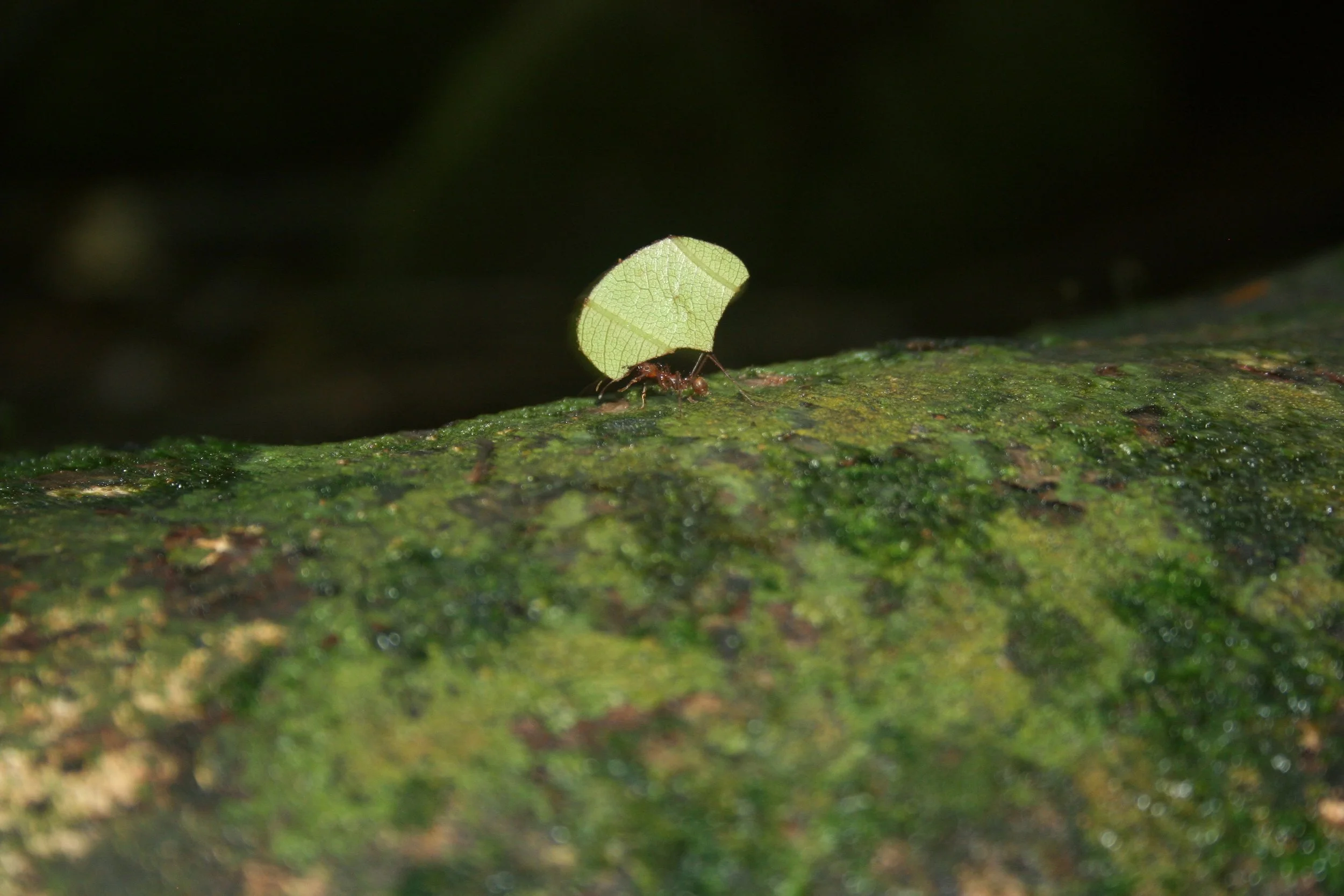
Atta cephalotes
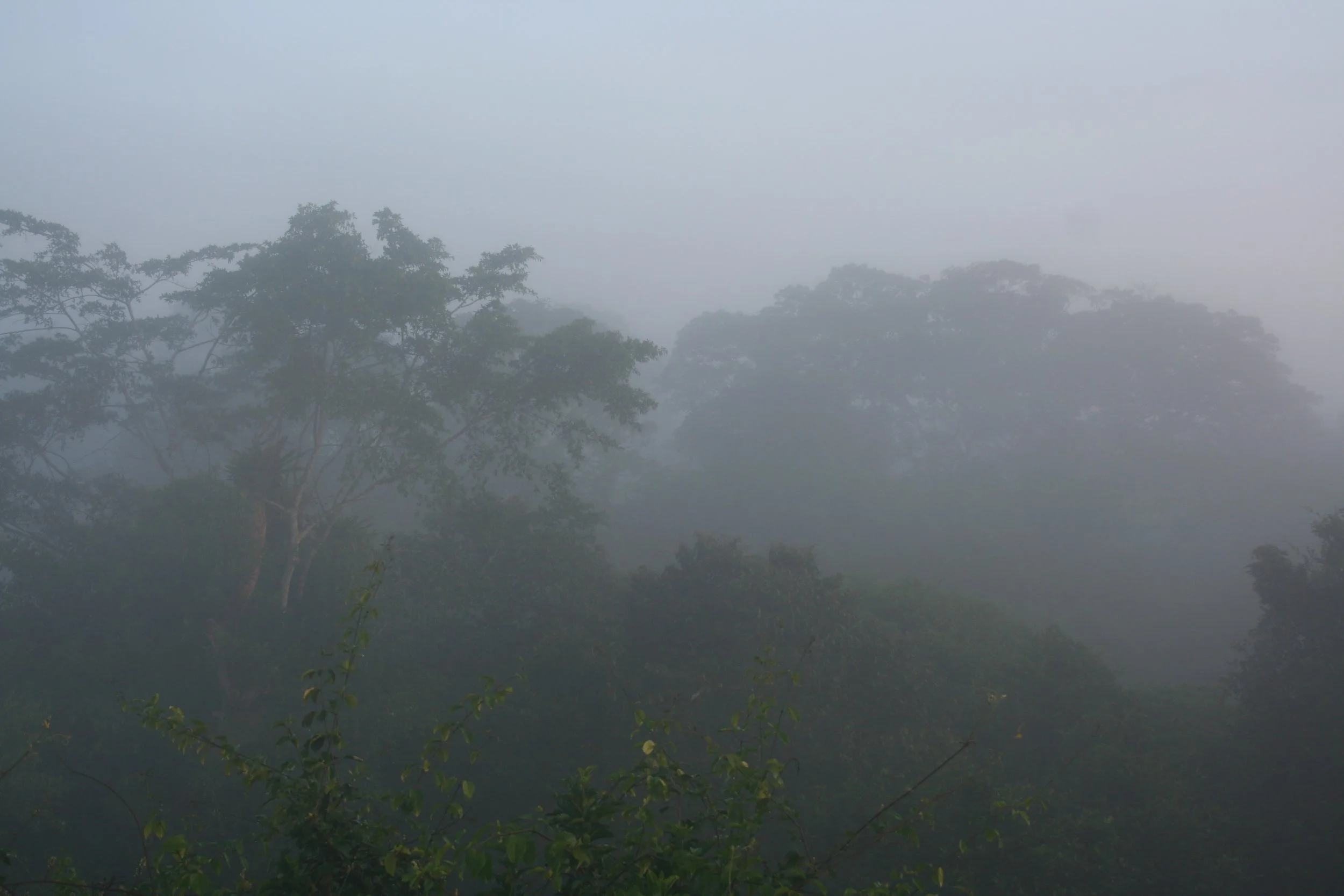
La Selva Biological Station, 2016
References:
Shulman HB, Aronson EL, Dierick D, Pinto-Tomás AA, Botthoff JK, Artavia-León A, Allen MF. Leafcutter ants enhance microbial drought resilience in tropical forest soil. Environ Microbiol Rep. 2024 Jun;16(3):e13251.
Allen MF, Shulman HB, Rundel PW, Harmon TC, Aronson EL. Leaf-cutter ants – mycorrhizal fungi: observations and research questions from an unexpected mutualism. Front Fungal Biol. 2023 Nov 16;4:1241916.